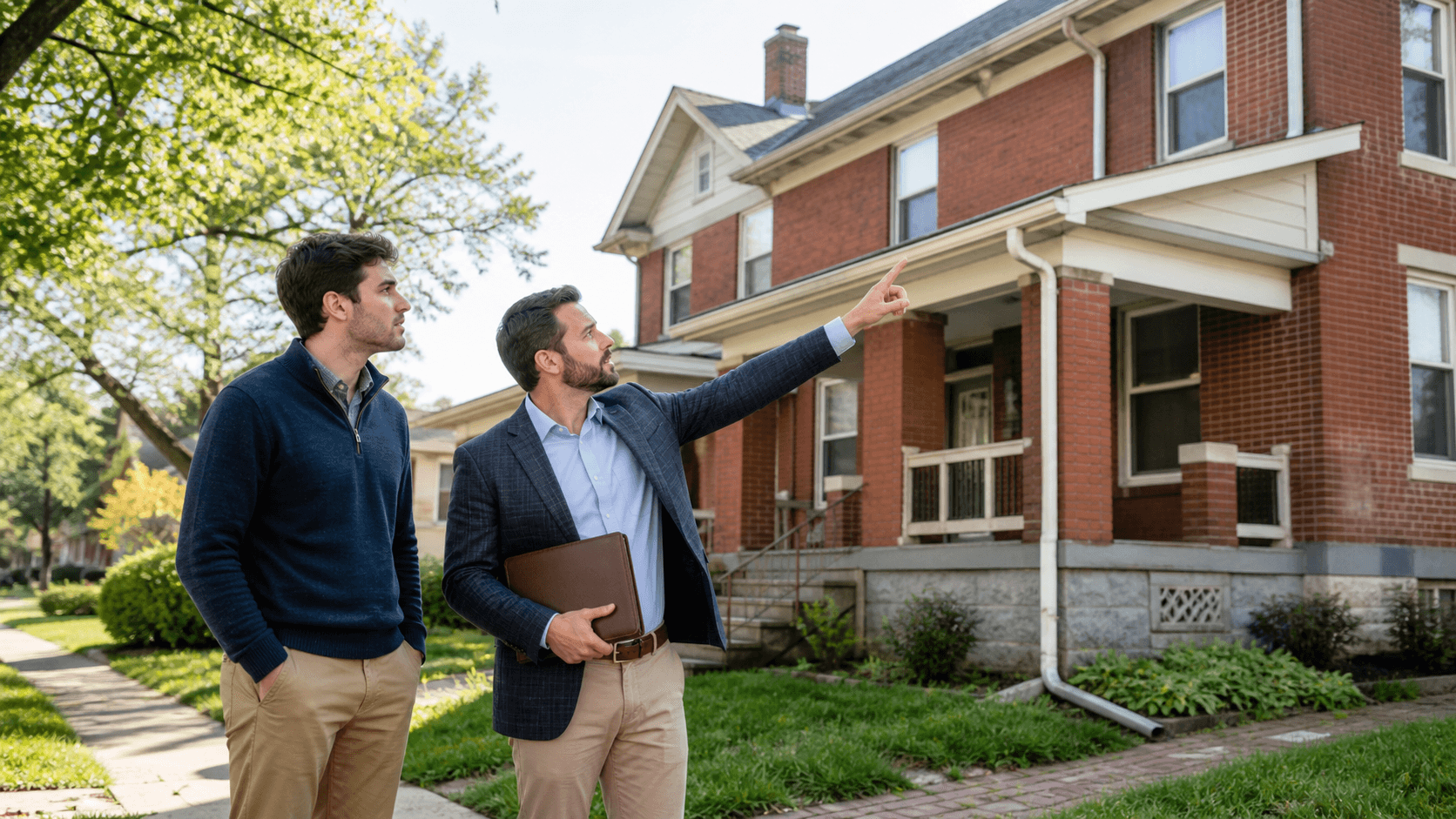
What Most First Time Real Estate Investors in Kentucky Get Wrong
First time real estate investors in Kentucky usually start the same way. Sitting on a porch in August, scrolling listings on a phone, excited by low prices and catchy "cash flow" screenshots. The houses look cheap, the spreadsheets look great, and it feels like there is no way to lose.
Here is the problem: the numbers on the screen rarely match what actually happens in Louisville, Lexington, or smaller towns like Elizabethtown or Richmond. A lot of the loud advice online is built for big coastal cities, not for Kentucky streets where values change fast from one block to the next. We want to walk through the most common mistakes we see new investors make here, and how an operator would look at the same deals very differently.
The ARV Trap That Makes New Buyers Overpay
ARV stands for After Repair Value. It is what a house should sell for once it is fixed up. New investors love ARV because it is clean and simple. The issue is how they get that number.
The common mistake is picking the top three prettiest sales in the nicest pocket of the area, then slapping that ARV onto a rougher house down the street. In Kentucky, that can be the fast road to overpaying.
On a lot of Louisville and Lexington streets, value can change fast when:
- You cross into a different school district
- One side backs to a busy road or railroad
- One side has mostly owner-occupants, the other is heavy rentals
Here is a simple example. A first-time real estate investor buys at 130,000 thinking:
- ARV: 210,000
- Rehab: 35,000
- Other costs: 10,000
- Expected profit: 35,000
Then the real world shows up. The house backs to traffic, or is on the "wrong" side of the street, and buyers are nervous. The true ARV comes in closer to 185,000. That neat 35,000 spread almost disappears.
How does an experienced Kentucky buyer pull comps?
- Tighter radius, usually within a few blocks when possible
- Same construction era and similar square footage
- Same school district, not just same ZIP code
- Same street feel, traffic level, and nearby features
If those do not line up, we treat that ARV as a maybe, not a promise, and we walk away if the buy price needs everything to go right.
Why Repairs in Kentucky Are Almost Always Higher Than You Think
August deals here can hide a lot. We get heavy rain, thick humidity, and long hot spells that push old systems to the limit. Things that look fine during a quick walkthrough can fail once you actually start work.
Most new investors walk a property and think in terms of:
- Paint
- Flooring
- New lights and faucets
That might look like 15,000 in their head. But older Kentucky homes like we see all over our area tend to surprise people. What really happens once work starts might include:
- Full HVAC replacement after it quits in the heat
- Subfloor rot around a tub or toilet
- Electrical panel upgrade when the old one is flagged
- Old cast iron or galvanized drains that need more work
- City code updates that trigger extra trades
Suddenly that "light" rehab is closer to 30,000 to 40,000.
Here is what most people do not realize: the expensive stuff is almost never the pretty finishes. The big checks go to roofs, foundations, HVAC, and electrical.
At minimum, a first-time real estate investor should walk a house with a simple checklist before writing an offer:
- Roof age and condition from the yard and inside the attic
- Signs of water in the basement or crawlspace
- Type and age of electrical panel
- Age and condition of the HVAC and water heater
- Sewer cleanout location and any backup signs
- GFCI outlets near water
- Visible patch work in ceilings, around windows, and in the foundation
If you cannot answer those items with some confidence, the rehab number you have is probably light.
Rent Myths, Fuzzy Exits, and Why the Plan Matters
On paper, rents in Kentucky can look higher than what you actually collect. Online estimates often use the best recent leases in the area. They do not always factor in vacancy, tenant screening, or the reputation of a block.
A new buyer might underwrite a rental at 1,500 per month because of a nearby remodeled house. In reality, that property might land closer to 1,250 or 1,300 if:
- The street is rougher or has more visible distress
- The yard is smaller or parking is tight
- You end up paying utilities or lawn care to attract decent tenants
The honest answer is that 200 per month difference can wipe out what looked like "cash flow" on a simple spreadsheet.
Another common trap is saying, "I will flip it or rent it, either way I win." A deal that only kind of works as a flip and kind of works as a rental usually does not work well as either. When the market slows or interest rates move, that fuzzy plan can hurt.
An operator looks at both exit strategies separately:
- Flip numbers: conservative ARV, real closing and holding costs, and realistic days on market, especially if you might list in winter
- Rental numbers: conservative rent, vacancy, maintenance, property management, and reserves
If the deal is only safe with best-case rent and best-case ARV, it is usually not a first deal.
Money, Contractors, and the "Team" Problem
New investors often fall for the contractor who says they can start tomorrow and do it cheap. Then work drags out, change orders pop up, and the project sits half-finished.
At the same time, many first-timers say yes to very expensive funding because they are scared of losing the deal. High fees and rates on a six to nine month flip can eat most of the profit.
Take this basic setup:
- Buy: 150,000
- Rehab: 40,000
- Sell: 230,000
With high cost money and a long timeline, after fees, interest, overruns, and holding costs, the profit might drop down close to 5,000 or 10,000. With better terms, tighter timelines, or a cleaner off-market buy, that same project might have room for 25,000 to 30,000.
Real talk, for a first-time real estate investor in Kentucky, the right "bench" early on is simple:
- A straight shooting buyer or agent who understands as-is deals
- A contractor with real references who has finished work you can see
- A local title or closing office that does a lot of investor transactions
That group will save you more than any fancy spreadsheet.
Smarter Ways to Start and a Simple Safety Filter
The best first deal in Kentucky is almost never the huge historic flip that needs everything. It is usually the boring, clean house that needs light work and has clear comps for resale or rent. Boring is good when you are learning.
Here is what most people do not realize: in many Kentucky areas, you can do better picking up a solid as-is property from a local seller, or through a team that works with private buyers, than fighting over retail listings with big investors.
For your first year, it helps to keep things simple:
- Pick one type of deal to focus on, like light rehabs in working-class areas
- Pick one or two neighborhoods and learn every street, school, and traffic pattern
- Pick one realistic funding path, like cash, a clear partner, or local private money, instead of trying every option at once
And remember, your first deal does not have to be perfect to be profitable. Even experienced operators have stories where they broke even or barely came out ahead. The goal is to avoid the worst mistakes so you can keep going.
Before you buy, run each deal through a quick filter:
- Would it still work if ARV is 5 to 7 percent lower than you think?
- Would it still work if rehab runs 25 percent over your best guess?
- Would it still work if it takes 60 to 90 extra days to sell or rent?
If the numbers fall apart under that small amount of pressure, that is a sign to slow down, talk with people who are active in Kentucky right now, and tighten your plan before you put your money on the line.
Take Your First Investment From Idea To Action
If you are a first-time real estate investor, we can help you move confidently from research to your first closed deal. At GSP Homes, we walk you through each step, from evaluating properties to understanding returns and timelines. Share your goals with us and we will help you shape a clear investing strategy tailored to your budget and comfort level. Reach out today so we can start mapping out your next steps together.